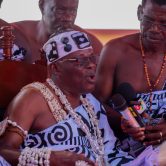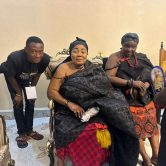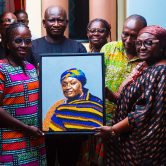
DUNKWAHENE IS THE LAST-IN-COMMAND OF THE DENKYIRA BENKUM DIVISION AND HE IS UNDER THE DENKYIRAHENE!

Dear Denkyira People,
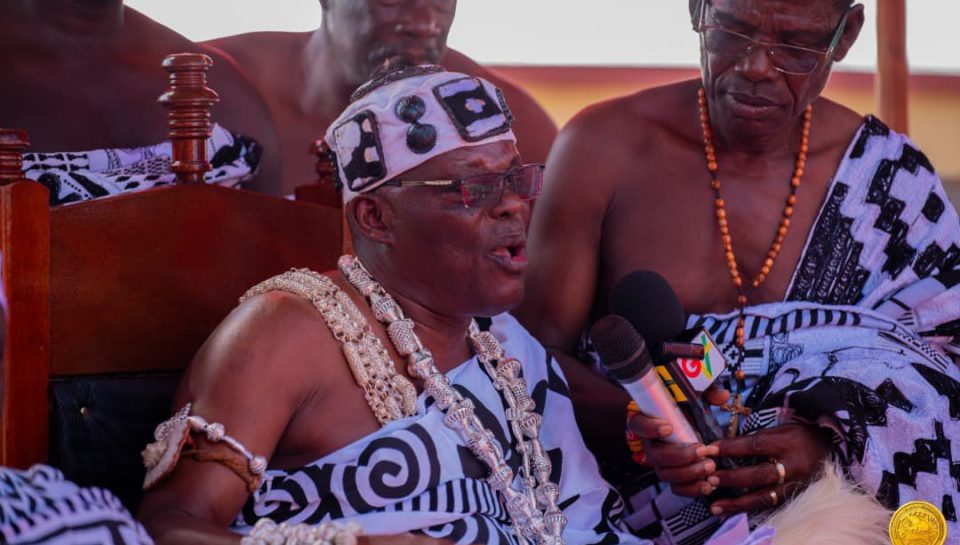
There has been a recent press conference from Dunkwahene, Nana Obeng Nuako III, causing controversy as to whether Dunkwahene is not under the authority of Denkyirahene. This calls for the Denkyira Heritage Foundation to give brief education on the role of Dunkwa in the Denkyira Kingdom’s setup.
To start with, Dunkwahene is traditionally the last-in-command of the Denkyira Benkum/Akomatire Divison. The Denkyira Akomatire/Benkum Divisional head is Mfuom chief and the setup is made up of; Dominase Chief, Nkasawora chief, Abesewa Chief, Mmradan chief, Breman chief, and then, Dunkwa chief. The Dunkwa royals since 1590 have served Denkyira Bankam Dwa and will remain under the Bankam Dwa unless the world undergoes a cataclysmic reset to end our civilization.
Dunkwa royals were located at Denkyira Maase and were serving Denkyirahene, Nana Mumunumfi, as far back as 1590. Attached to the Maase stool, were the ancient deities Kobiri and Akua Nam which served the Denkyirahene as war deities. After the demise of Denkyirahene, ↄdℇℇfoↄ Boa-Amponsem I in 1695, the Denkyira royals started a civil revolt as to who to occupy the Bankam Stool – battle between Nana Ntim Gyakari and Nana Assenso Kuffuor. This family squabbles gradually led to the Feyiase Civil Uprise in 1701. The Maase people who formed an integral part of the Denkyira Kingdom migrated during the civil uprise.
At Maase, they were led by Nana Peprah Gyamena and Nana Frema Ampomaa. Their migration was initiated by Nana Tomfo Kuru, while Nana Amo Kusi Yiadom eventually assumed leadership, guiding them from Maase. The migration proved difficult, and many lives were lost along the way as they abandoned their settlement and crossed the Offin River. This sorrowful experience gave rise to their stool horn: “Awusia eeeee” translated “orphan eeee”.
Nana Amo Kusi Yiadom later became the Mmradan chief. In a demonstration of loyalty and kinship, he granted his nephew, Nana Kwadu Akyem, the stretch of land from the River Offin to an odum tree (hence the name Dunkwa) as landmark. Nana Amo settled at present-day Mmradan (Mmerℇ dane translated Time Changes). After Nana Kwadu Akyem, Nana Kofi Anyinam became the next Dunkwahene. Nana Kofi Anyinam is credited for creating the Dunkwahene’s drum epithet, “Yekyiri wo yenno wo, Kofi yekyiri wo yenno wo.” The story behind that is for another day. Dunkwahene is traditionally under Mmradanhene because Mmradan gave Dunkwahene a land to settle. However, these two stools Mmradan and Dunkwa, remained faithful to the Denkyira Bankam stool, as they had always been part of Denkyira Kingdom.
In 1818, Denkyirahene Nana Kwadwo Tibu I resolved to avenge Denkyira after Nana Osei Asibe Bonsu proved ungrateful and hatched diabolical plans for Denkyira after Denkyirahene killed Nana Kwadwo Adinkra during the Gyaman War. For the protection of the Great Denkyira Stools, he relocated the capital from Abankesieso which was within the vicinity of the present day Jacobu in search of a secure settlement which led to establishment of Jukwa. Nana Kwadwo Tsibo positioned most of the Adonten troops at the bank of the Offin River to stop possible Asante attacks. It was during these preparations, as he mobilised the right army to confront Asante, which he was halted at Fomena and was compelled to sign the Bond of 1844, which effectively restrained Denkyira from further wars.
When Nana Kwadwo Tibu I realized that he could no longer fight to avenge his kingdom, he reestablished the Divisions of his Kingdom. He placed Dunkwa and his traditional uncle, Mmradan under the Akomatire (Benkum Division) of the Denkyira Traditional Council as already stated even though the division has undergone several restructuring.
Denkyirahene, Nana Nkwantabisa III (1931 – 1941) was brought from Nkawie to assume the Denkyira Bankam Dwa with aggressive development agenda. The Denkyirahemaa then was Nana Akosua Abono Tia. In June 1938, upon several consultations, the Provincial Commissioner of Gold Coast made recommendations that the distance between Lower and the Upper Denkyira are far. According to the Commissioner, “the headquarters of the state should be removed from Lower to Upper Denkyira. This I think is very necessary as all the works and developments are in Upper Denkyira and it is most difficult to administer the state satisfactorily from Jukwa.”
Nana Nkwatabisa III initially moved from Jukwa to Ayanfuri chief, Nana Kwame Ampem to stay with him to do feasibility study as to where to position the new administration headquarters in Upper Denkyira. Nana Nkwatabisa III realized that the administration should be placed in the centre of Upper Denkyira. So a place between Dunkwa and Ayanfuri was chosen. Dunkwa township settlement in 1941 ended at present-day Ghana Commercial Bank. So, Nana Nkwantabisa III took the land from the bank of the “Amakokora stream” from the present day Dwakesiem to Atechem. Sadly, Nana Nkwantabisa III left Denkyira for Nkawie in 1941.
Nana Owusu Bore II (1942-1953) became the new Denkyira King in 1942 and continued the project of Nana Nkwantabisa III. Dunkwahene, Nana Kwaku Pootuwa was also enstooled in 1942 just as Denkyirahene, Nana Owusu Bore II. Dunkwahene was even Odikro and not ‘Apakanhene’ by then. Nana Kwame Kuma was the then Mmradan chief. Denkyirahene, Nana Owusu Bore II, named the selected area by Nana Nkwantabisa III as Abankesieso, in remembrance of the ancient capital of the Denkyira Kingdom. Nana Owusu Bore II built the Administrative Palace of Denkyira at Abankesieso in consultation of all Denkyira chiefs then and every chief made contribution to its building. All lands under Denkyira Kingdom traditionally is under the care of the Denkyirahene and every chief in Denkyira serve Denkyirahene! This is the brief history of Dunkwa and its role in Denkyira setup!
The new Denkyira shall be built on peace, tolerance and communal unity against poverty and social vices. Denkyirahene, ↄdℇℇfoↄ Boa-Amponsem IV, is a man of peace and development. He comes as a beacon of unity for the Denkyira kingdom. It is his installation that attracted all scattered Denkyiras who have been away for over 335 years back home. Unity will prevail and Denkyira shall be a beacon of development. All hands must be on deck for the cause of the Denkyira Kingdom. Adawu Adawu Denkyira, pℇntℇmprℇm mene sono!
Thank you
I remain your humble servant.
Nana Boadu Ntiamoah
Denkyira Heritage Foundation – Reviving Denkyira Legacies